
CHRISTINE HENSELER
CHRISTINE HENSELER
CHRISTINE HENSELER

Co-President, Center for Humanities Communication (CHC)
Professor Emerita, Union College, NY
E-mail: henselec@union.edu
Let's start here....
My life's been a journey across continents and cultures, starting in London with German parents, then growing up everywhere from São Paolo and Wisconsin to high school in Spain, and even completing an apprenticeship in Germany. These experiences certainly taught me the value of multicultural learning and hands-on training, but they're just the backdrop.
What truly lights me up – you know that bubbly, deeply satisfying feeling? – is the pure joy of inspiring and supporting young people, helping them find their way, designing programs that work for them and are filled with radical hope, joy, creativity, play, and a deep passion for learning.
When in 2015-16, I was offered a 100K Mellon grant to create the NY6ThinkTank
with colleagues at Colgate, Hamilton, Skidmore, St. Lawrence, Hobart and William Smith, and Union College, I jumped at the chance to offer fellowships to dozens of students to communicate the value of their humanities degrees in their own voices and through their own perspectives..


Can we communicate the value of the arts and humanities
While playing The GoGame with students and staff, my colleague Katherine Walker, from Hobart and William Smith Colleges, and I developed a workshop with young professionals working in Music+GPS location, Videography, and Game. We wanted to show our students that careers in these fields are exciting, relevant and multidisciplinary. It was a blast!
1
What are the Arts and Humanities?
2
Information about Majors
3
Essays by Students and Alumni

Portraits of Young Professionals
4
5
Info about Career Options
Fun Facts and Data Contextualized
6
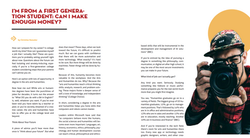
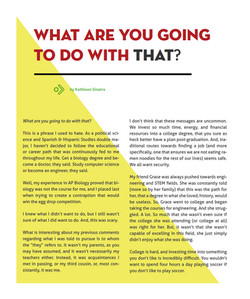
This guide gives an overview of what the arts and humanities are and what kind of professions students can pursue. It is meant to inspire students to explore more options for themselves and others, not to provide every and all possible details. Students will find concrete examples of some possible career options and real life insights through personal essays, student interviews, portraits of young professionals, facts and figures, and answers to some of their most commonly asked questions.






At Union College I also led a Mellon Planning grant called
"Our Shared Humanities"
The "Our Shared Humanities" planning grant was initiated to cultivate a sustainable vision for the Humanities at Union College, a campus renowned for its strengths in science and engineering.
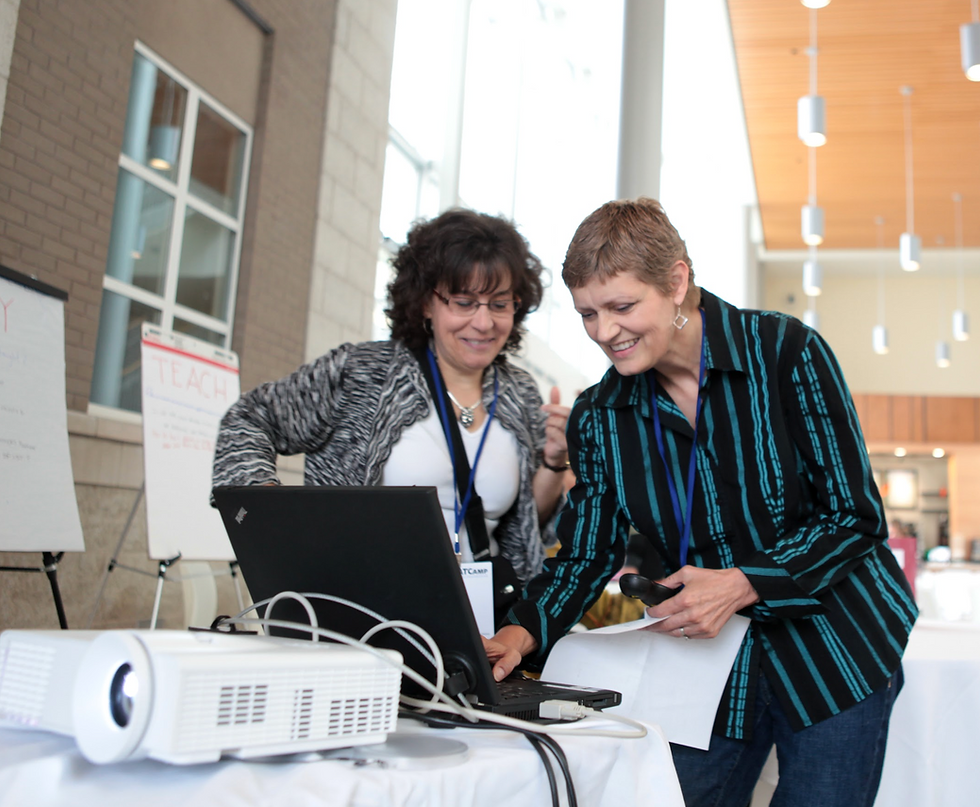
Over eighteen intensive months, our comprehensive outreach—engaging nearly all faculty and dozens of staff across four divisions, consulting a humanities expert, and hosting events like a THATCamp, two 4Humanities workshops, a Humanities Maker event, and a "Mellon Mixer"—allowed us to deeply understand the current landscape, articulate the inherent value, and identify effective strategies.
This extensive effort ultimately illuminated how faculty can lead collaborative, cross-disciplinary efforts to support, inspire, and advocate for humanistic studies, enhancing communication and connection not only at Union but across the NY6 Consortium and beyond.




Could we do more by collabOrating and centralizing our efforts?
Could a Center for Humanities Communication be the Answer?
In 2022, with my colleague Alan Liu, we founded The Center for Humanities Communication

The CHC establishes humanities communication as a recognized field of practice, partnering with scholars, students, and institutions to transform humanistic knowledge and insight into accessible public-facing dialogue, and to advocate for the enduring value of humanistic inquiry itself.